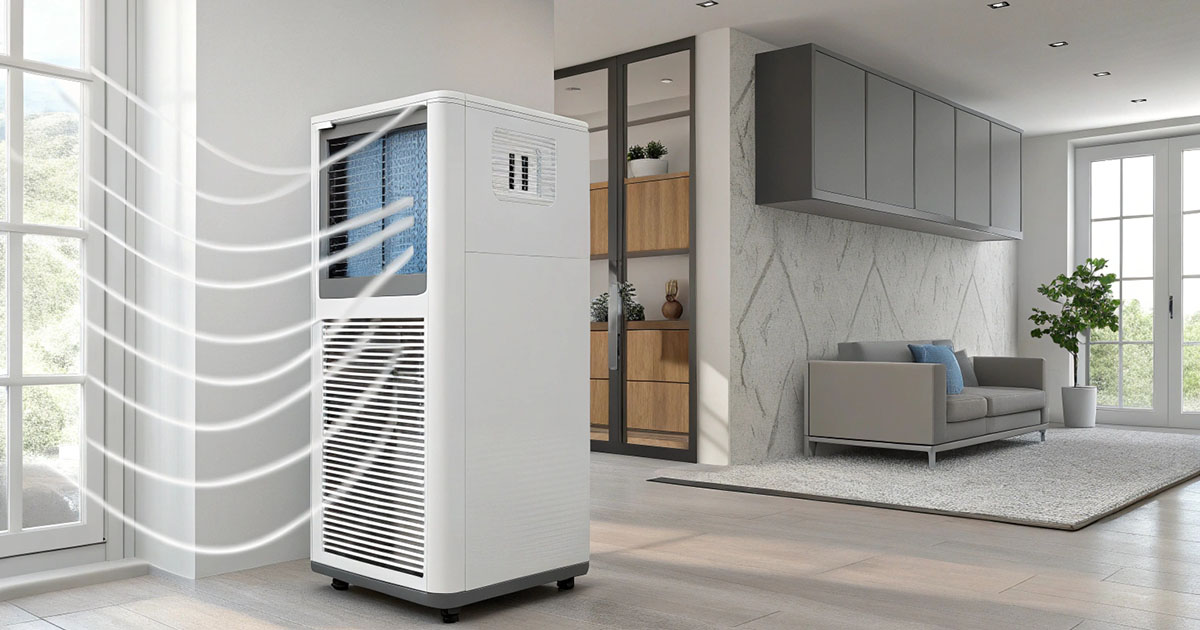
Dehumidifiers play a critical role in modern environments, especially where humidity control is essential. Different types of dehumidifiers operate on distinct principles, offer varying performance levels, and suit specific applications. Selecting the optimal solution requires evaluating environmental conditions, energy efficiency, noise sensitivity, maintenance needs, and operational costs.
1. Primary Types and Operating Principles
Mechanical Refrigeration (Compressor-Based)
The most common type, this system uses a compressor to circulate refrigerant, condensing moisture from air onto an evaporator. Key components include a compressor, evaporator, condenser, and fan. Ideal for homes, laboratories, and small warehouses, it delivers stable performance at moderate energy consumption.
Desiccant Wheel (Dry Dehumidification)
Utilizing a honeycomb rotor infused with silica gel, molecular sieves, or activated carbon, this type adsorbs moisture in a processing zone while a regeneration zone heats the rotor to release trapped water. Effective in extreme temperatures (-30°C to +40°C), it excels in high-humidity industrial settings like textile plants and pharmaceutical storage.
Liquid Desiccant Dehumidifiers
These systems use hygroscopic solutions like lithium chloride or triethylene glycol to absorb moisture. Capable of achieving dew points as low as -40°C and humidity control precision of ±2-3%, they are ideal for cleanrooms, food processing, and semiconductor manufacturing.
Constant Climate Systems
Combining heating, cooling, and humidification, these units maintain precise temperature and humidity levels (±2% RH). Critical for data centers, museums, and biotech labs requiring ultra-stable environments.
Ducted Dehumidifiers
Designed for centralized HVAC integration, these systems recover condensation heat to reduce energy consumption. Commonly used in hospitals, commercial buildings, and underground facilities.
Semiconductor (Peltier Effect) Dehumidifiers
Using thermoelectric cooling, these compact units operate silently (~35dB) but have limited capacity (up to 10.5L/day). Suitable for electronics cabinets, boats, and confined spaces.
2. Key Performance Metrics
- Dehumidification Capacity
Measured in liters per day (L/day) or pints/day under standardized conditions (e.g., 65°F, 60% RH). Actual performance varies with ambient temperature and humidity.
- Energy Efficiency Ratio (EER)
Expressed as L/kWh. High-end models (e.g., De’Longhi T22A3) achieve 5.2L/kWh, saving 35% more energy than standard units.
- Temperature Range
Standard models operate between 18-38°C, while low-temperature variants function at 5-38°C. Desiccant wheels work down to -30°C.
- Humidity Control Precision
Liquid and constant climate systems maintain ±2-3% RH stability, while compressor models typically offer ±5% RH.
- Noise Levels
Semiconductor and ducted units operate at ~35dB; compressor models may exceed 50dB.
- Condensate Management
Features include tank capacity, pump lift height (e.g., 10m for DH-826D), and auto-shutoff to prevent overflow.
3. Application-Specific Recommendations
Residential Use
Compact compressor units (12-25L/day) like the De’Longhi B12A3 suit small apartments (30-50m²), consuming 0.4-0.6kWh/day. Larger spaces (60-150m²) benefit from high-efficiency models like the T22A3.
Industrial & Warehousing
Desiccant wheels maintain 30-90% RH in seed banks and tobacco storage. Liquid systems prevent microbial growth in food warehouses.
Healthcare & Laboratories
Liquid desiccant systems ensure ±2% RH stability in operating rooms and drug storage facilities, complying with ISO 14644-1 cleanroom standards.
Specialized Environments
Underground facilities use desiccant or liquid systems for long-term stability. Semiconductor units protect sensitive electronics in control rooms.
4. Emerging Trends
- Variable-Speed Technology
Inverter compressors adjust power based on humidity, reducing energy waste. Expected to capture 30% of premium markets by 2025.
- Eco-Friendly Refrigerants
Hydrocarbon refrigerants like R290 (propane) replace high-GWP alternatives, though safety measures for flammability are required.
- AI-Driven Controls
Smart systems with humidity sensors and cloud integration enable predictive maintenance and fault detection.
- Hybrid Systems
Combining compressor and desiccant technologies improves efficiency. Membrane-assisted systems (e.g., Nafion™) achieve -60°C dew points for aerospace applications.
5. Selection Criteria
- Environmental Needs
Match capacity to room size and humidity targets (e.g., 25L/day for 60-150m² spaces).
- Energy Costs
Prioritize high EER models (≥5L/kWh) for frequent use. Desiccant systems can reduce energy use by 50% with waste-heat recovery.
- Noise Sensitivity
Opt for semiconductor or ducted units in bedrooms/offices.
- Maintenance Requirements
Desiccant wheels require quarterly cleaning; liquid systems need solution replacement every 1-2 years.
- Smart Features
UV-C sterilization, IoT connectivity, and air quality monitoring add value in commercial settings.
- Regulatory Compliance
Ensure CE, AHRI 340, or PSE certifications for export markets.
6. Common Misconceptions
- Bigger Isn’t Always Better
Overcapacity leads to frequent cycling, increased wear, and excessive energy use.
- Automatic Mode Saves Energy
Setting humidity to 55-65% RH with auto mode prevents compressor overuse.
- Ducted Units Work for Small Spaces
Models like DH-826D efficiently serve 20-35m² spaces with integrated ventilation.
7. Maintenance Best Practices
- Clean filters every 2 weeks; coil/fan cleaning every 3 months.
- Avoid running below 50% RH to reduce wear.
- Schedule annual professional inspections for electrical components and refrigerant levels.
- Store units dry and covered during the off-season.
8. Market Outlook
China produces 80% of global dehumidifiers but has a domestic penetration rate under 5% (vs. 30% in Europe). Brands like De’Longhi and Panasonic lead innovation, while startups focus on smart, niche designs (e.g., baby rooms, wine cellars). Exporters must meet regional standards like EU’s EN IEC 60335-2-40 and EPA’s AHRI 340.
Conclusion
The right dehumidifier balances technical performance, environmental demands, and operational economics. By understanding types, metrics, and trends, businesses can optimize humidity control for comfort, health, and productivity.