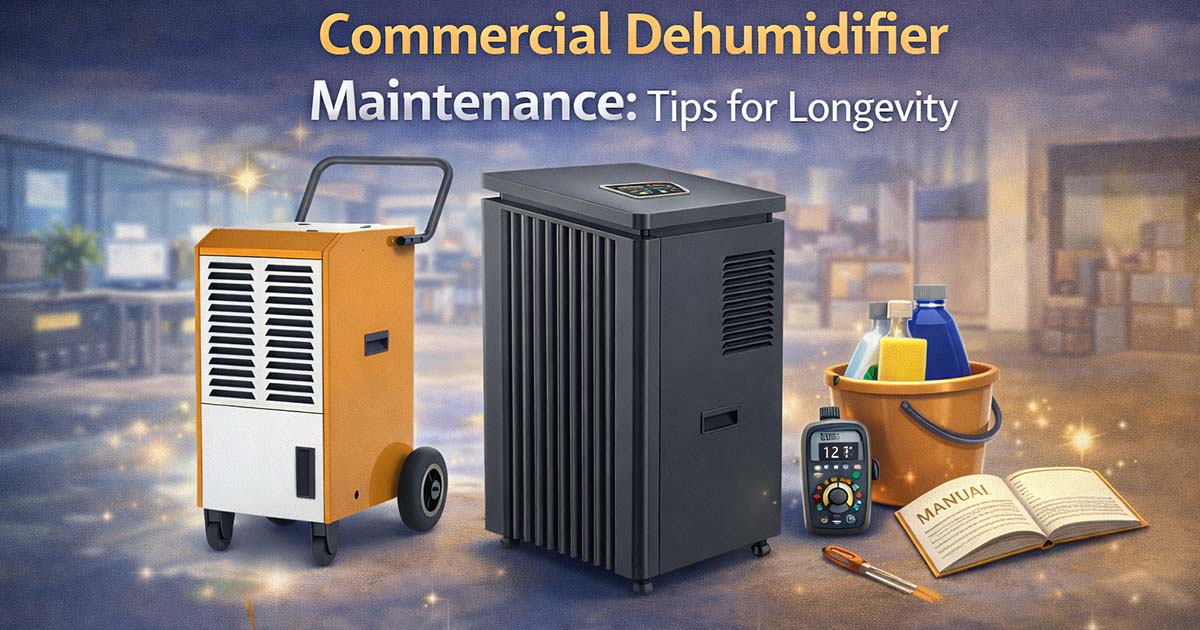
In commercial facilities, dehumidifiers are critical assets that protect property, equipment, and occupant health. Yet, many businesses overlook the simple maintenance routines that transform a 3-5 year lifespan into a 7-10 year investment—extending operational life while reducing replacement costs by up to 60%. This guide provides actionable maintenance strategies to maximize performance, minimize downtime, and ensure your commercial dehumidifiers deliver consistent moisture control for years to come.
Daily and Weekly Maintenance Routines
Establishing consistent daily and weekly maintenance habits is the foundation of dehumidifier longevity. Begin with the most critical task: cleaning air filters weekly by rinsing with water to maintain airflow and prevent coil clogging. In dusty environments like warehouses, manufacturing floors, or construction sites, increase filter cleaning frequency to 2-3 times weekly to sustain unit performance and avoid reduced efficiency.[^1][^7]
Daily tasks should include checking the water collection tank—empty it daily or activate continuous drainage to prevent overflow, mold growth, and bacterial contamination that compromises air quality.[^4] Also inspect drain hoses weekly for kinks or clogs, which can cause water leaks and system backups that damage facility infrastructure. These simple actions prevent 70% of common dehumidifier failures before they occur.
Pro Tip: Create a maintenance log with checklists for staff. A single missed filter cleaning can reduce airflow by 40%, directly impacting dehumidification efficiency and increasing energy costs.[^11] Consistent routines turn maintenance from a chore into a proactive business asset.
Cleaning Filters, Coils, and Drainage
The evaporator coil is the heart of moisture removal, and its cleanliness directly determines efficiency. Vacuum or brush evaporator coils every 1-3 months to remove dust accumulation, which improves efficiency by 30% while reducing compressor strain.[^2] For sheet metal units commonly found in commercial settings, use foaming coil cleaners for thorough sanitation without damaging the delicate coil structure.[^8]
Drainage system maintenance is equally vital. Clogged drains not only cause water backups but also create stagnant water reservoirs that breed mold and bacteria—critical concerns for health-conscious commercial spaces. When cleaning drainage components, ensure all hoses are straight and free of debris, and verify that continuous drain connections are secure.
For facilities with high dust loads (e.g., textile mills, woodworking shops), consider installing pre-filters to capture larger particles before they reach the main filter. This reduces cleaning frequency by 50% and extends the life of your primary filtration system.
Monitoring Performance and Components
Proactive monitoring catches potential issues before they escalate into costly failures. Inspect the compressor and fan quarterly for unusual noises or signs of wear during operation—squealing bearings or rattling components often indicate impending mechanical failure.[^5] Early detection prevents catastrophic breakdowns that halt operations.
Calibrate the humidistat biannually to ensure accurate humidity control, which directly impacts energy savings and moisture removal effectiveness. A misaligned humidistat can cause units to run longer than necessary, wasting 15-20% in energy costs while failing to maintain target humidity levels.[^9]
Track key performance indicators monthly:
- Water removal rate (compare to initial specs)
- Energy consumption (kWh/day)
- Run time (hours/day)
- Noise levels (dB)
Discrepancies in these metrics signal maintenance needs. For example, a 25% increase in run time for the same moisture load indicates coil or filter blockage requiring immediate attention.
Professional Servicing for Peak Longevity
While daily and weekly tasks are essential, annual professional servicing is non-negotiable for peak longevity. Schedule comprehensive checks for refrigerant levels and electrical connections, which can degrade over time and cause safety hazards or performance drops.[^6]
Professional technicians perform tasks beyond DIY capabilities:
- Recharge refrigerant to optimal levels (critical for efficiency)
- Test electrical components for wear and potential failure
- Verify compressor health and lubrication
- Inspect condensate pumps for proper function
- Clean internal components inaccessible to standard maintenance
This investment pays for itself: units receiving annual professional servicing achieve 30-40% longer lifespans and maintain 90%+ of their original efficiency compared to neglected units. For high-usage commercial environments (e.g., hotels, hospitals, data centers), consider biannual professional servicing to match the intensity of operations.
Critical Insight: Proper maintenance extends commercial unit lifespan from 3-5 years to 7-10 years, reducing total cost of ownership by over 50% compared to units requiring frequent replacement.[^10] This transforms dehumidifiers from operational expenses into long-term assets.
Conclusion
Commercial dehumidifier maintenance isn’t just about preventing breakdowns—it’s a strategic business practice that protects your facility, equipment, and bottom line. By implementing these daily, weekly, and professional maintenance routines, you ensure consistent humidity control, reduce energy costs, and eliminate the costly downtime associated with unexpected failures.
For B2B distributors and facility managers, promoting these maintenance best practices to your clients builds trust and positions your brand as a knowledgeable partner—rather than just a vendor. When clients understand that proper care extends equipment life and reduces operational costs, they become loyal, repeat customers who value your expertise.
Remember: A dehumidifier is only as good as its maintenance. The few minutes spent cleaning a filter daily or scheduling an annual service can save thousands in replacement costs and operational disruption. Make maintenance a core part of your commercial dehumidifier strategy—and watch your clients’ satisfaction and equipment longevity soar.
Footnotes
[^1]: Clean air filters weekly by rinsing with water to maintain airflow and prevent coil clogging. Source: Solenco Store, “How to Maintain and Extend the Life of Your Dehumidifier” https://www.solencostore.com/blogs/news/how-to-maintain-and-extend-the-life-of-your-dehumidifier
[^2]: Vacuum or brush evaporator coils every 1-3 months to remove dust and improve efficiency by 30%. Source: Moisture Cure Commercial, “Maintenance and Best Practices for Commercial Dehumidifiers” https://moisturecurecommercial.com.au/maintenance-and-best-practices-for-commercial-dehumidifiers/
[^3]: Check drain hoses weekly for kinks or clogs to avoid water leaks and backups. Source: DeAir, “How to Maintain Industrial Dehumidifier” https://deair.com.vn/how-to-maintain-industrial-dehumidifier
[^4]: Empty water collection tank daily or use continuous drain to prevent overflow and mold growth. Source: Moiswell, “Maintenance Tips for Prolonging the Lifespan of Your Commercial Dehumidifier” https://moiswell.com/blogs/news/maintenance-tips-for-prolonging-the-lifespan-of-your-commercial-dehumidifier
[^5]: Inspect compressor and fan quarterly for unusual noises or wear during operation. Source: Moisture Cure Commercial, “Maintenance and Best Practices for Commercial Dehumidifiers” https://moisturecurecommercial.com.au/maintenance-and-best-practices-for-commercial-dehumidifiers/
[^6]: Schedule annual professional checks for refrigerant levels and electrical connections. Source: DeAir, “How to Maintain Industrial Dehumidifier” https://deair.com.vn/how-to-maintain-industrial-dehumidifier
[^7]: In dusty environments, clean filters 2-3 times weekly to sustain unit performance.
[^8]: Use foaming coil cleaners on sheet metal units for thorough sanitation without damage.
[^9]: Calibrate humidistat biannually to ensure accurate humidity control and energy savings.
[^10]: Proper maintenance extends commercial unit lifespan from 3-5 years to 7-10 years. Source: Antair System, “Maintenance Tips to Extend the Life of Industrial Dehumidifiers” https://www.antairsystem.com/news/maintenance-tips-to-extend-the-life-of-industrial-dehumidifiers.html
[^11]: Inconsistent filter cleaning frequency reduces airflow and directly impacts dehumidifier performance.