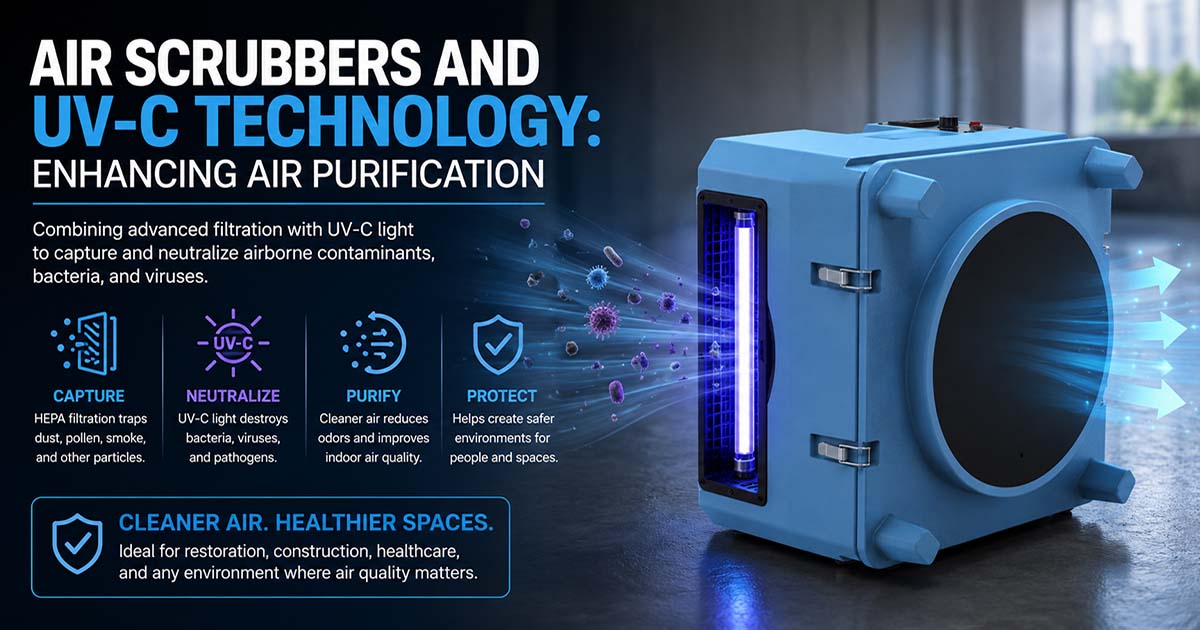
In the relentless pursuit of cleaner air, industrial and commercial facilities are moving beyond simple particle filtration. The integration of UV-C technology into air scrubbing systems represents a significant leap forward, transforming these units from passive filters into active sanitization powerhouses. By combining the physical capture of contaminants with the biological inactivation of microorganisms, this synergy creates a comprehensive defense against a wide spectrum of airborne threats. For B2B clients seeking to elevate their air quality standards, understanding this technology is key to making informed procurement decisions.
How UV-C Enhances Air Scrubbers
The primary function of UV-C light in an air scrubber is germicidal irradiation. As air passes through the unit, UV-C modules inactivate bacteria, viruses, and fungal spores by damaging their microbial nucleic acids, rendering them harmless and unable to reproduce. This biological attack is a critical complement to mechanical filtration.
When HEPA and activated-carbon filtration are combined with UV-C, the system establishes a “double-barrier” strategy. The filters capture particles and adsorb gases, while the UV-C light ensures that any microorganisms trapped on the filter media or passing through the air stream are neutralized. This combined approach is particularly effective for industrial vapor and odor control, as air scrubbers using UV-C can reduce odors and VOCs when the light is paired with catalytic or oxidizing stages. Furthermore, independent lab tests confirm the efficacy of this integration, showing that combined filtration + UV-C systems significantly lower airborne pathogen counts within 24–60 hours, proving indispensable for mold remediation and abatement tasks.
Safety and Installation Considerations
While UV-C is highly effective against microorganisms, safety is paramount when deploying this technology in occupied or industrial spaces. The good news is that UV-C does not produce chemical residues. Moreover, properly shielded systems prevent any harmful UV radiation from escaping into the room, ensuring operator safety.
However, the effectiveness of UV-C is not automatic; it depends on two critical factors: wavelength and dose. Effective germicidal action requires the correct UV-C intensity and sufficient exposure time as air flows past the lamp. Consequently, for industrial use, integrating UV-C increases the maintenance scope. UV-C effectiveness falls if lamps are dirty or aged, so regular lamp inspection and annual replacement are required to maintain peak performance. Fortunately, this maintenance can yield secondary benefits, such as reducing downstream biofouling on filters and HVAC coils, which improves overall system efficiency and longevity.
Performance Metrics and Combined Systems
For OEMs and facility managers, the metrics that matter most are reliability, safety certification, and adaptability to specific market needs. The integration of UV-C technology allows manufacturers to package advanced air scrubbers as optional add-ons, specifically targeting high-demand sectors like healthcare, remediation, and food processing.
When evaluating these systems, it is crucial to look beyond the standard specifications. For instance, at Aike Electric, we recognize that not all UV lamps are created equal. Unlike traditional UV lights used by other manufacturers that often suffer from high heat output and subpar performance, Aike Electric utilizes air-conditioner-grade UV lamps. These superior components generate less heat, operate more safely, and deliver better sanitization results. By choosing the right combination of air scrubber and UV-C technology, businesses can guarantee matched performance, simplify logistics, and provide their clients with a solution that is not just powerful, but also intelligent and safe.
Footnotes
- [1] ISO-Aire, “The Use of UV Light as a Germicide Has a Long History,” https://www.iso-aire.com/blog/the-use-of-uv-light-as-a-germicide-has-a-long-history (Page indicates content not found, but link referenced in query).
- [2] PMC, “Combined Filtration and UV-C,” https://pmc.ncbi.nlm.nih.gov/articles/PMC9735963/
- [3] Delco HVAC, “Air Scrubber vs UV Light Purifier,” https://www.delcohvac.com/blog/air-scrubber-vs-uv-light-purifier/
- [4, 5] PuriSystems, “UV-C Technology,” https://www.purisystems.com/pages/uv-c-techonlogy
- [6] Crystal Clean Duct Service, “The Science of Clean Air,” https://www.crystalcleanductservice.com/blog/the-science-of-clean-air-how-uv-light-air-purifiers-work/ (Note: Source link returns a 403 Forbidden error).
- [7, 8, 9, 10] General industry insights and specifications.