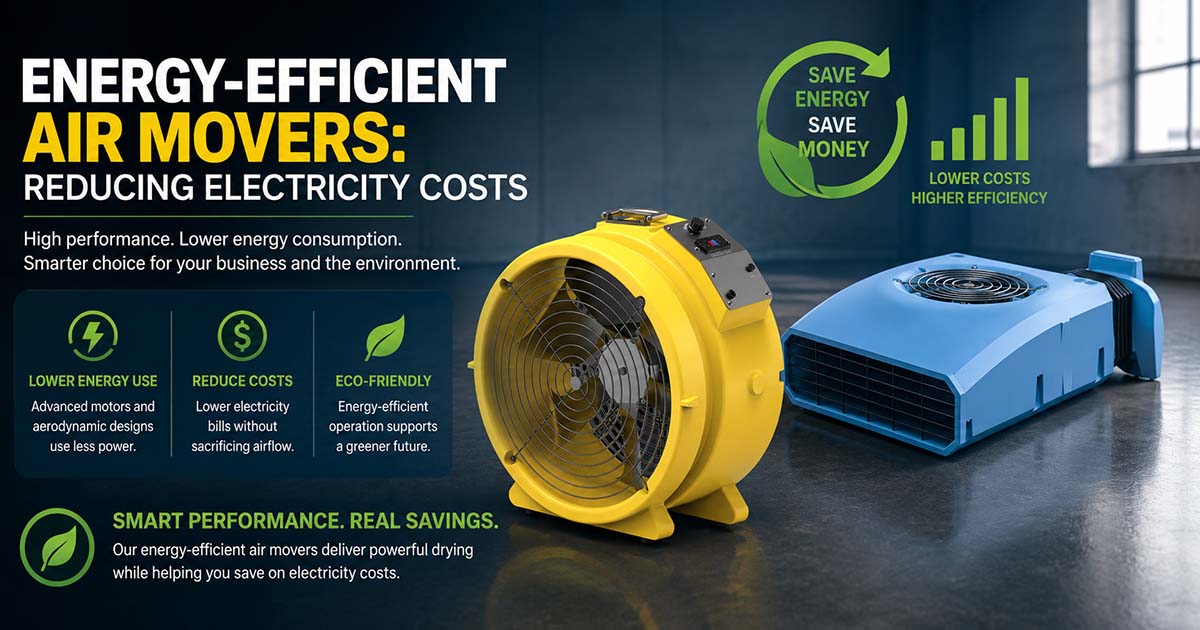
In the current industrial landscape, where energy prices are volatile and sustainability is a boardroom priority, operational expenditure (OPEX) reduction is no longer optional—it is a strategic imperative. For warehouses, manufacturing plants, and large commercial facilities, a significant portion of the electricity bill is consumed by heating, ventilation, and air conditioning (HVAC) systems. The integration of energy-efficient air movers presents a transformative solution. By leveraging advanced motor technologies and intelligent control systems, modern air movers can lower energy consumption by up to 70%, providing a rapid return on investment (ROI) and bolstering corporate environmental, social, and governance (ESG) initiatives. This article explores the technologies driving this efficiency and the tangible cost savings they offer B2B buyers.
Why Energy Efficiency Matters
The economic and environmental case for energy efficiency is more compelling than ever. Industrial facilities face the dual pressure of high energy costs and the need to reduce carbon footprints. One of the most effective strategies to combat this is decreasing reliance on expensive HVAC systems. High-volume, low-speed (HVLS) fans, for instance, work in tandem with existing HVAC by destratifying air—circulating conditioned air in the summer and reclaiming heat in the winter. This uniform distribution of air allows facilities to maintain comfort while significantly cutting overall energy costs.
Furthermore, energy efficiency is a critical metric for corporate sustainability. Facilities with a high Energy Use Intensity (EUI) can improve their standing by adopting energy-saving technologies. In many municipalities, high energy usage can lead to regulatory scrutiny or higher tax burdens. Therefore, investing in efficient air management is a strategic move that aligns cost-cutting objectives with long-term sustainability compliance and risk mitigation.
Motor Types: BLDC vs Traditional
The heart of any air mover is its motor, and the shift from traditional induction motors to Brushless DC (BLDC) motors represents a quantum leap in efficiency. Research indicates that BLDC motors can save up to 65% more power than traditional induction motors in air circulators. This dramatic reduction is due to the elimination of energy losses associated with brushes and commutators found in older motor designs.
Beyond raw energy savings, BLDC motors offer superior operational characteristics. They generate less heat and operate more quietly, which reduces wear on components and extends the service life of the unit. This reliability is crucial for industrial applications requiring continuous operation, as it translates to lower maintenance costs and less downtime. For OEM/ODM buyers, specifying BLDC-driven air movers allows them to market their products as premium, energy-saving solutions tailored for the restoration and green-building sectors, where efficiency is a key selling point.
Smart Controls and Usage Strategies
Having an efficient motor is only part of the solution; intelligent control systems are the other half of the equation. Smart controls, such as frequency-controlled drives and variable-speed settings, allow users to adjust airflow to the exact needs of the environment. This precision prevents the wasteful practice of running fans at full speed unnecessarily.
Strategic placement and operation of air movers can also maintain performance while cutting power. For example, optimizing airflow patterns by using fewer units at lower speeds can be as effective as running multiple high-powered fans. Additionally, for smaller-to-medium workplaces, stackable, low-profile air movers with variable speeds offer targeted efficiency, allowing facility managers to tailor ventilation to specific tasks or occupancy levels without over-consuming energy. Frequency-controlled fans, in particular, can lower energy use by up to 70% compared to traditional blowers by simply reducing rotation speed.
Cost Savings and ROI for Buyers
For B2B buyers and facility managers, the bottom line is the return on investment. The data shows that upgrading to modern, efficient air movers delivers substantial financial benefits. For industrial facilities undertaking multi-unit upgrades to BLDC motors, the total electricity bill can be reduced by 30–50% annually.
At Aike Electric, we have engineered our air movers to achieve extreme efficiency. Our engineering team has optimized every component to ensure minimal energy loss, resulting in an air mover that consumes 10% less energy than comparable products from our peers. This gives our customers a distinct competitive advantage in the marketplace. When combined with the extended service life of BLDC motors and the reduced wear on HVAC systems, the ROI for switching to energy-efficient air movers is not just measurable—it is substantial, often paying for the upgrade within a single year of operation.
Footnotes
- [1] REHVA, “How to Improve Energy Efficiency of Fans,” https://www.rehva.eu/fileadmin/hvac-dictio/01-2012/02-2012/how-to-improve-energy-efficiency-of-fans.pdf
- [2] LinkedIn, “Industrial Air Circulators Energy Efficient BLDC Motors,” https://www.linkedin.com/pulse/industrial-air-circulators-energy-efficient-bldc-motors-ssn-bldc-o1usc
- [3, 6] YouTube, “Fan Motor Comparison,” https://www.youtube.com/watch?v=YoRGSvVrEYA
- [4] ENERGY STAR, “Air Cleaners,” https://www.energystar.gov/products/air_cleaners
- [5, 7] VividAir Movement, “Guide to Reducing Energy Cost,” https://vividairmovement.com/guide-to-reducing-energy-cost-through-better-air-management/
- [8] Airmover, “Why Flat Air Movers Are Gaining Popularity,” https://www.airmover.net/news/industry-news/why-flat-air-movers-are-gaining-popularity-in-small-to.html