
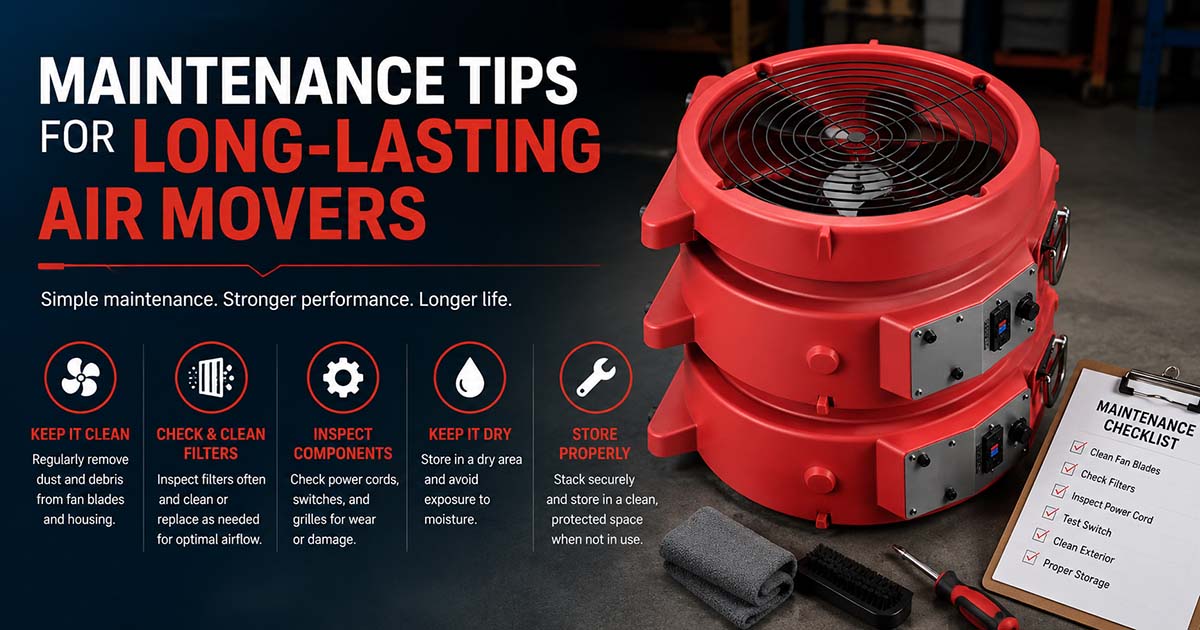
In the demanding environments of restoration, construction, and industrial drying, air movers are indispensable tools. These powerful machines are built to withstand tough conditions, but their longevity and performance depend heavily on proper care. Implementing a consistent maintenance routine is not just about fixing problems; it is a strategic investment. Regular upkeep can extend the service life of your air movers by several years, prevent costly downtime, and ensure they operate at peak efficiency.
Basic Cleaning and Inspection
The most fundamental aspect of air mover maintenance is keeping the unit clean. Dust, dirt, and debris are the primary enemies of airflow efficiency. When grills and blades are clogged, the machine must work harder, generating more heat and increasing wear on vital components.
A rigorous cleaning schedule should be the cornerstone of your maintenance plan. Before and after every job, take the time to clean the intake and exhaust grills. This simple step prevents dust buildup that restricts airflow right from the start. Furthermore, regularly wipe down the housing and fan blades using a damp cloth or a soft brush to remove accumulated grime without damaging the unit.
If you disassemble the fan for a deep clean, reassemble it carefully. Ensuring the blades spin freely is critical to avoid vibration and imbalance, which can lead to premature wear.
For commercial operations managing a fleet of air movers, implementing a simple maintenance log for each unit is a highly effective practice. These logs help track usage, schedule preventative care, and highlight early signs of wear, ultimately reducing unexpected downtime.
Motor, Fan Blades, and Electrical Safety
The motor is the heart of the air mover, and its health depends on proper lubrication, secure components, and electrical safety. Neglecting these aspects can lead to catastrophic failure, especially in demanding environments.
Some models require periodic bearing lubrication to keep the motor running smoothly. Always follow the manufacturer’s recommended schedule and use the correct type of lubricant to prevent friction and overheating. A key indicator of motor or fan health is its sound and vibration pattern. Pay close attention to any unusual noises or a noticeable reduction in airflow, as these can be early warning signs of blade damage or motor degradation.
Because air movers are frequently used in wet environments, electrical safety is paramount. Before each use, inspect power cords and plugs for any signs of damage, fraying, or wear. Faulty cords are a safety hazard and can overheat, so they should be replaced immediately. Additionally, avoid overloading electrical circuits by checking the total amperage of your equipment and staggering the air movers across multiple outlets.
Storage and Long-Term Use Practices
Proper storage is just as important as maintenance during active use. How you store your air movers can significantly impact their longevity and readiness for the next job.
When a job is complete, store your air movers in a dry, covered location. Exposure to the elements can lead to rust and component degradation. Keep the power cords loosely coiled to prevent kinks and damage to the internal wiring, which can be caused by tight wrapping. By following these storage best practices, you ensure that your equipment is protected and ready to deploy at a moment’s notice.
Footnotes
- [1, 2, 4, 6] randrmagonline.com/articles/91452-how-to-clean-and-maintain-air-movers
- [3] oneincomedollar.com/2016/03/basic-air-mover-maintenance.html
- [5] hartzellairmovement.com/blog/top-five-maintenance-tips-to-extend-industrial-fan-lifespan/